Author

Steven

Browsing

Start Your Day Right with Winter Egg Muffins

As the temperature drops and the mornings become chilly, there’s nothing quite like a warm, hearty breakfast to kickstart your day. Our Winter Egg Muffins are not only delicious but also incredibly versatile and easy to make. Packed with protein, cheese, and veggies, these muffin cups are a delightful way to enjoy eggs for breakfast, especially on those cold mornings when you need something comforting. Let’s dive into why you will love this recipe and how you can make it your own!

Why You’ll Love This Recipe

  • Quick and Easy: With just a handful of ingredients and minimal prep time, you can whip these up in no time, making them perfect for busy mornings.
  • Meal Prep Friendly: These muffin cups are ideal for meal prepping; make a batch on the weekend and enjoy them throughout the week. Just pop them in the fridge, and you’re set!
  • Customizable: The beauty of these egg muffins is their versatility. You can easily swap in your favorite vegetables or proteins to suit your taste.
  • Healthy and Nutritious: Packed with protein and fiber, these muffins are a wholesome breakfast option that will keep you satisfied until lunch.
  • Kid-Friendly: Kids love these muffins! They’re easy for little hands to grab and eat, making breakfast a breeze for busy families.

Ingredients You’ll Need

Gathering the right ingredients is key to making these delicious muffins. Here’s what you’ll need:

  • 8 large eggs: The base of our muffins, providing protein and a fluffy texture.
  • 1/3 cup milk: To add creaminess; you can use any milk, including almond or soy for a dairy-free option.
  • 1 cup shredded cheddar cheese: For that delightful cheesy goodness; feel free to try different cheeses like feta or mozzarella.
  • 1/2 cup cooked diced potatoes: Adds heartiness; leftover roasted potatoes work great!
  • 1/2 cup chopped spinach: A fantastic way to sneak in some greens; you can also use kale or any other leafy greens.
  • 1/4 cup diced onion: For flavor; shallots or green onions are great substitutes.
  • 1/2 teaspoon salt and 1/4 teaspoon black pepper: Essential seasonings to enhance the flavors.
  • 1 tablespoon olive oil: For sautéing the onions and adding healthy fats.

Step-by-Step Instructions

Now that you have your ingredients, let’s get cooking! Follow these simple steps:

  1. Preheat your oven to 375°F (190°C) and grease a muffin tin or line with muffin cups.
  2. In a large bowl, whisk together the eggs and milk until smooth.
  3. In a skillet, heat the olive oil over medium heat and sauté the onion until it’s soft and translucent.
  4. Add the cooked potatoes and spinach to the skillet, stirring until the spinach wilts.
  5. Evenly divide the vegetable mixture into the muffin cups, filling them about halfway.
  6. Sprinkle the cheese on top of the vegetables, then pour the egg mixture over everything until just full.
  7. Bake for about 20–22 minutes or until the muffins are set and lightly golden on top.
  8. Let them cool for a few minutes, then carefully remove from the tin and serve warm.

Pro Tips for Perfect Egg Muffins

  • Don’t Overfill: Leave a little space at the top of the muffin cup to allow for rising.
  • Use Fresh Ingredients: Fresh vegetables will give you the best flavor and texture.
  • Mix and Match: Feel free to experiment with different ingredients like bell peppers, ham, or herbs.
  • Check for Doneness: Insert a toothpick in the center; it should come out clean when fully cooked.
  • Cool Before Storing: Let muffins cool completely before storing them in the fridge to prevent sogginess.
  • Reheat Gently: When reheating, do so in the microwave or oven to avoid rubbery textures.
  • Make it Colorful: Add a variety of veggies for a beautiful presentation.
  • Keep it Simple: If you’re short on time, use pre-cut veggies or leftover ingredients.

Common Mistakes and Troubleshooting

Even seasoned cooks can encounter issues. Here’s how to avoid common pitfalls:

  • Overcooked Muffins: Keep an eye on the baking time; they can go from perfect to dry quickly.
  • Not Enough Flavor: Be generous with your seasonings; under-seasoning can lead to bland muffins.
  • Sticking to the Pan: Make sure to grease your muffin tin well or use paper liners to prevent sticking.
  • Uneven Cooking: Ensure your oven is properly preheated and consider rotating the muffin tin halfway through baking.

Variations to Try

These muffins are a blank canvas! Here are some delicious variations you can try:

  • Southwestern Style: Add black beans, corn, and diced jalapeños for a spicy kick.
  • Italian Flare: Incorporate sun-dried tomatoes, basil, and mozzarella for an Italian twist.
  • Greek-Inspired: Use feta cheese, olives, and chopped tomatoes for a Mediterranean flavor.
  • Sweet Potato and Kale: Substitute potatoes with roasted sweet potatoes and use kale for a nutrient boost.

Storage and Make-Ahead Instructions

These muffins are perfect for meal prep!

  • Refrigeration: Store cooled muffins in an airtight container in the fridge for up to 5 days.
  • Freezing: For longer storage, freeze muffins in a single layer on a baking sheet, then transfer to a freezer bag for up to 3 months.
  • Reheating: Reheat in the microwave for about 30 seconds or in the oven at 350°F until warmed through.

Frequently Asked Questions

  • Can I make these muffins dairy-free? Absolutely! Use a dairy-free milk and omit the cheese or use a dairy-free alternative.
  • What can I use instead of eggs? For a vegan version, try using flaxseed meal mixed with water as an egg substitute.
  • How do I know when they are done? The muffins should be set in the center and lightly golden on top—use a toothpick to check for doneness!
  • Can I add cooked meat? Yes, cooked sausage, bacon, or ham can be added for extra protein and flavor.
  • How long do they last in the fridge? These muffins can last up to 5 days in the fridge when stored properly.
  • Can I use frozen vegetables? Yes, just make sure to thaw and drain any excess water before adding them to the mix.
  • What are good side dishes to serve? Fresh fruit, yogurt, or a simple salad pair well with these muffins.
  • Can I double the recipe? Certainly! Just make sure to adjust your baking time if using a larger muffin tin.

Nutritional Tips and Dietary Adaptations

These muffins can easily fit into various dietary needs:

  • Low Carb: Substitute regular potatoes with cauliflower rice or zucchini.
  • High Protein: Add cottage cheese or Greek yogurt to the egg mixture for added protein.
  • Vegetarian: Keep it vegetarian by loading up on veggies and omitting any meat.

Equipment Recommendations

To make your cooking experience smooth, here are some handy tools:

  • Muffin Tin: A standard 12-cup muffin tin works best for even baking.
  • Mixing Bowls: A set of mixing bowls in various sizes for easy ingredient preparation.
  • Whisk: A good whisk is essential for blending eggs and milk together.
  • Silicone Spatula: Perfect for folding in ingredients and scraping the bowl clean.

Serving Suggestions

These muffins are delicious on their own, but you can enhance your breakfast experience with:

  • Fresh Fruit: Serve with a side of mixed berries or sliced bananas for a refreshing touch.
  • Yogurt: A dollop of Greek yogurt can add creaminess and extra protein.
  • Hot Sauce: A drizzle of your favorite hot sauce can elevate the flavor profile!

Conclusion

Your mornings don’t have to be rushed or bland. With these Winter Egg Muffins, you can enjoy a satisfying, nutritious meal that’s easy to prepare and customize. Whether you’re meal prepping for the week or simply looking for a quick breakfast option, these muffins are designed to bring warmth and comfort to your table. So grab your ingredients and get cooking—your taste buds will thank you!

Winter Egg Muffins Breakfast

Prep Time 10 minutes
Cook Time 20 minutes
Total Time 30 minutes
Servings 4 muffins
Calories 220
A warm and nutritious breakfast perfect for cold mornings, these egg muffins are packed with vegetables and cheese for a satisfying start to your day.

Ingredients

Eggs

  • 8 large eggs
  • 1/3 cup milk
  • 1 cup shredded cheddar cheese
  • 1/2 cup cooked diced potatoes
  • 1/2 cup chopped spinach
  • 1/4 cup diced onion
  • 1/2 teaspoon salt
  • 1/4 teaspoon black pepper
  • 1 tablespoon olive oil

Instructions 

  • Preheat oven to 375°F (190°C) and grease a muffin tin.
  • Whisk eggs and milk until smooth.
  • Sauté onion in olive oil until soft; add potatoes and spinach.
  • Divide vegetables into muffin cups, add cheese, then pour egg mixture on top.
  • Bake for 20–22 minutes until set, then cool briefly and serve.
Notes

Feel free to add your favorite vegetables or herbs for variety.
Calories: 220kcal
Cost: $15
Course: Breakfast
Cuisine: American
Keyword: Eggs

Elevate Your Weeknight Dinners with Herbed Butter Baked Salmon

Welcome to a culinary journey that transforms busy weeknights into gourmet experiences! This Herbed Butter Baked Salmon recipe is not just effortless; it’s a celebration of fresh flavors that will make your taste buds dance. With a few simple ingredients and straightforward steps, you can bring the elegance of a fine dining restaurant right into your home kitchen. Let’s dive into why this dish is a must-try!

Why You’ll Love This Recipe

  • Quick and Easy: Prep time is minimal, and with only about 15 minutes in the oven, you’ll have a delicious meal ready in no time.
  • Flavorful and Fresh: Infused with vibrant herbs and zesty lemon, this salmon dish is bursting with flavor, elevating your dinner experience.
  • Healthy and Nutritious: Packed with omega-3 fatty acids, salmon is a heart-healthy choice that promotes overall wellness.
  • Versatile Ingredients: Use whatever fresh herbs you have on hand, allowing you to customize the dish to your taste preferences.
  • Impressive Presentation: The colorful blend of salmon, herbs, and lemon makes for an eye-catching dish that’s perfect for entertaining.

Ingredients Breakdown

Before we get cooking, let’s gather our ingredients. Here’s what you’ll need:

  • 2 skin-on salmon fillets: Choose fresh, high-quality fish for the best flavor.
  • 4 tablespoons unsalted butter: This will be your herbed butter base. If you prefer a dairy-free option, substitute with olive oil.
  • 1 tablespoon fresh dill: Adds a lovely fresh flavor. If you don’t have dill, feel free to replace it with tarragon or basil.
  • 1 tablespoon fresh parsley: Brightens up the dish. Flat-leaf parsley works best.
  • 1 teaspoon fresh chives: For a mild onion flavor. You can also use green onions or shallots.
  • 1 clove garlic: Minced for a fragrant kick. Garlic powder can be used as a substitute if needed.
  • 1 teaspoon fresh lemon zest: This enhances the citrus flavor. Avoid bottled lemon juice for the best results.
  • 1 tablespoon fresh lemon juice: Brightens up the dish. You can also use lime juice for a different twist.
  • 1/4 teaspoon sea salt: Adjust according to your taste.
  • 1/4 teaspoon freshly cracked black pepper: For a bit of heat.
  • 1 lemon: Sliced, to lay under the fish for extra flavor.

Pro Tips for Perfect Salmon

To ensure your Herbed Butter Baked Salmon comes out perfectly every time, keep these expert tips in mind:

  • Pat the salmon dry: This helps the skin crisp up beautifully and allows the flavors to penetrate the fish better.
  • Use parchment paper: Lining your baking sheet makes for easy cleanup and prevents sticking.
  • Let the salmon rest: Allowing it to rest for a few minutes after baking keeps it moist and tender.
  • Check for doneness: The salmon is ready when it flakes easily with a fork and the internal temperature reaches 145°F (63°C).
  • Customize your herbs: Feel free to experiment with herbs like cilantro, oregano, or thyme for different flavor profiles.
  • Don’t skip the lemon slices: They infuse the salmon with moisture and flavor, making it even more delicious.
  • Use a fork to check texture: If you press down gently on the salmon with a fork, it should flake easily when cooked.
  • Serve with a squeeze of lemon: A final squeeze of lemon juice just before serving brightens all the flavors.

How to Make Herbed Butter Baked Salmon

Now, let’s get started on your delicious salmon journey!

  1. In a small bowl, combine the softened butter, chopped dill, parsley, chives, minced garlic, lemon zest, lemon juice, salt, and pepper. Use a fork to mash everything together until it’s fully incorporated and forms a vibrant green, fragrant compound butter.
  2. Preheat your oven to 400°F (200°C). Take a paper towel and pat the salmon fillets completely dry on both sides. Then, line a baking sheet with parchment paper or a silicone mat and arrange the thin lemon slices in a single layer.
  3. Gently lift up the corner of the salmon skin and use a small spoon or your fingers to slide about half of the herbed butter underneath the skin, spreading it as evenly as you can. Then, take the remaining butter and spread it generously over the top (the flesh side) of each fillet.
  4. Place the prepared salmon fillets skin-side down on top of the lemon slices on your baking sheet. Slide the tray into the preheated oven and bake for 12 to 15 minutes. The exact time will depend on the thickness of your fillets and how you like your salmon cooked. You’ll know it’s done when the butter is bubbly and the top is lightly golden, and the salmon flakes easily when you press the top with a fork.
  5. Once you pull the salmon from the oven, resist the urge to dig in immediately! Let it rest on the pan for about 3 to 5 minutes. This allows the juices to redistribute throughout the fillet, ensuring every single bite is moist and tender.
  6. Carefully transfer the salmon fillets to your serving plates, using a thin spatula. You can serve them with the softened, baked lemon slices from the pan—they’re delicious to eat! Give it one final squeeze of fresh lemon juice over the top right before serving to really make all the flavors pop.

Common Mistakes to Avoid

Even the best of us can make a few missteps in the kitchen. Here are some common mistakes to watch out for:

  • Not drying the fish: Skipping this step can lead to soggy skin instead of a delightful crisp.
  • Overcooking: Salmon can dry out quickly, so keep an eye on it as it bakes.
  • Using cold butter: Cold butter won’t mix well with the herbs. Make sure it’s softened for easy blending.
  • Ignoring internal temperature: Always check with a food thermometer for perfect doneness.
  • Not letting it rest: Serving immediately can lead to a dry texture; a few minutes of resting can make a big difference.

Delicious Variations to Try

Feeling adventurous? Here are some tasty variations to spice things up:

  • Citrus Twist: Add orange zest and juice for a sweeter citrus flavor.
  • Spicy Kick: Mix in some cayenne pepper or crushed red pepper flakes for a spicy herbed butter.
  • Asian Fusion: Substitute the herbs with sesame oil, ginger, and scallions to create an Asian-inspired dish.
  • Mediterranean Delight: Use sun-dried tomatoes, olives, and feta cheese in place of fresh herbs for a Mediterranean twist.

Storage and Make-Ahead Instructions

If you want to prepare in advance, here’s how to store your delicious salmon:

  • Refrigerator: Store any leftovers in an airtight container for up to 3 days.
  • Freezer: You can freeze cooked salmon for up to 3 months. Wrap tightly in plastic wrap and then foil before placing in a freezer bag.
  • Reheating: Thaw in the refrigerator overnight and reheat gently in the oven or microwave to avoid drying out.

Frequently Asked Questions

Got questions? We’ve got answers! Here are some common inquiries about our herbed butter baked salmon:

  • Can I use frozen salmon? Yes! Just adjust the baking time to account for the frozen state.
  • What sides pair well with this dish? Serve with steamed vegetables, rice, or a crisp salad for a balanced meal.
  • Can I use different types of fish? Absolutely! This recipe works well with trout, halibut, or even chicken.
  • How do I know when the salmon is done? It should flake easily with a fork and be opaque in color.
  • What if I don’t have fresh herbs? Dried herbs can be used, but use them sparingly as they are more concentrated.
  • Is this recipe gluten-free? Yes! All ingredients are naturally gluten-free.
  • Can I prepare the herbed butter ahead of time? Yes! You can make the herbed butter a day in advance and store it in the fridge.
  • What’s the best way to serve leftovers? Flake the salmon and use it in salads, sandwiches, or pasta dishes for a quick meal.

Nutritional Tips and Dietary Adaptations

This Herbed Butter Baked Salmon is not only delicious but also nutritious! Here are some tips for healthy adaptations:

  • Low-Calorie Option: Substitute butter with olive oil or avocado oil for a lighter version.
  • Paleo-Friendly: This recipe is naturally paleo and gluten-free, making it a great option for many dietary preferences.
  • Boost the Veggies: Serve with a side of roasted or steamed vegetables to enhance the meal’s nutrient density.

Equipment Recommendations

To make your cooking experience as smooth as possible, here are some recommended tools:

  • Baking Sheet: A sturdy baking sheet is essential for even cooking.
  • Parchment Paper: Helps prevent sticking and makes cleanup a breeze.
  • Food Thermometer: An invaluable tool for ensuring perfectly cooked salmon.
  • Small Mixing Bowl: Ideal for mixing your herbed butter.
  • Thin Spatula: Perfect for transferring delicate fish fillets to serving plates.

Serving Suggestions

To create a complete meal, consider these delightful serving ideas:

  • Grain Base: Serve over a bed of quinoa, brown rice, or couscous for added texture and nutrition.
  • Fresh Salad: Pair with a mixed green salad topped with citrus vinaigrette for a refreshing complement.
  • Crusty Bread: Serve with a slice of crusty baguette to soak up any remaining herbed butter.
  • Wine Pairing: A chilled Sauvignon Blanc or Pinot Grigio pairs beautifully with salmon.

Wrapping Up

Cooking doesn’t have to be stressful or complicated. With this Herbed Butter Baked Salmon recipe, you’re not just making a meal; you’re creating a delightful experience for yourself and your loved ones. I hope this guide inspires you to embrace your inner chef and enjoy the process of cooking. Remember, great food is about confidence and a willingness to try new things. Happy cooking!

Herbed Butter Baked Salmon

Prep Time 10 minutes
Cook Time 15 minutes
Total Time 25 minutes
Servings 2 servings
Calories 350
A flavorful and easy-to-make baked salmon recipe topped with a fragrant herbed butter, perfect for a quick and elegant meal.

Ingredients

Main ingredients

  • 2 fillets skin-on salmon fillets
  • 4 tablespoons unsalted butter
  • 1 tablespoon fresh dill
  • 1 tablespoon fresh parsley
  • 1 teaspoon fresh chives
  • 1 clove garlic (minced)
  • 1 teaspoon fresh lemon zest
  • 1 tablespoon fresh lemon juice
  • 1/4 teaspoon sea salt
  • 1/4 teaspoon freshly cracked black pepper
  • 1 lemon lemon slices

Instructions 

  • Mix softened butter with herbs, garlic, lemon zest, lemon juice, salt, and pepper until combined.
  • Preheat oven to 400°F (200°C). Pat salmon dry and line a baking sheet with parchment. Arrange lemon slices.
  • Slide half of the herbed butter under the skin of each fillet and spread remaining butter over the top.
  • Place salmon skin-side down on lemon slices and bake for 12-15 minutes until golden and flaky.
  • Let rest for 3-5 minutes, then serve with baked lemon slices and a squeeze of fresh lemon juice.

Notes

Use fresh herbs for the best flavor. Adjust baking time based on fillet thickness.
Calories: 350kcal
Cost: $15
Course: Main Course
Cuisine: American
Keyword: Salmon

Welcome to Your New Favorite Cozy Vegetable Soup Recipe!

If you’re looking for a comforting, nutrient-packed meal that’s easy to prepare, you’ve found it! This Ultimate Cozy Vegetable Soup is a delightful blend of fresh vegetables and herbs, designed to warm you from the inside out. Not only is this soup recipe simple and versatile, but it also caters to a variety of dietary preferences. Let’s dive into why this soup is a must-try!

Why You’ll Love This Recipe

  • Quick and Easy: In just 30 minutes, you can create a hearty meal that’s perfect for busy weeknights.
  • Customizable: Feel free to swap in your favorite vegetables or whatever’s in season to make this soup your own.
  • Healthy and Nutritious: Packed with vitamins and minerals, this soup is a great way to boost your immune system.
  • Freezer-Friendly: Make a big batch and store it in the fridge or freezer for a quick meal anytime you need it.
  • Comforting Flavor: The combination of fresh herbs and vegetables creates a rich, delicious flavor that warms the soul.

Ingredients Breakdown

Let’s take a closer look at the ingredients that make this soup so special:

  • 2 tablespoons olive oil: A heart-healthy fat that enhances the flavor of your vegetables.
  • 1 medium onion: Chopped for a savory base that adds sweetness as it cooks.
  • 2 cloves garlic: Minced for an aromatic punch that elevates the soup’s flavor profile.
  • 3 medium carrots: Sliced for sweetness and color, adding essential vitamins.
  • 2 stalks celery: Sliced to introduce a subtle crunch and a fresh aroma.
  • 1 medium bell pepper: Diced for a burst of color and sweetness.
  • 1 medium zucchini: Diced to add texture and moisture.
  • 1 cup green beans: Cut into 1-inch pieces, providing a nice crunch.
  • 1 can diced tomatoes: With juice, for acidity and depth of flavor.
  • 4 cups vegetable broth: Use low-sodium for a healthier option.
  • 1 teaspoon dried thyme: A classic herb that complements the vegetables beautifully.
  • 1 teaspoon dried basil: Adds a fresh, Italian-inspired flavor.
  • Salt and pepper: To taste, enhancing all the natural flavors.
  • 2 cups spinach or kale: Chopped, for a nutritious boost right before serving.
  • Fresh herbs: Such as parsley or cilantro, for garnish.
  • Grated Parmesan cheese: Optional, but adds a creamy richness.
  • Croutons: For added texture and crunch.

Step-by-Step Instructions for Your Vegetable Soup

Ready to create this delicious cozy soup? Let’s break it down step by step:

  1. Heat the Olive Oil: In a large pot over medium heat, warm the olive oil.
  2. Sauté the Aromatics: Add the chopped onion and minced garlic. Sauté for about 3-5 minutes, until the onion is translucent.
  3. Add the Vegetables: Stir in the sliced carrots, celery, bell pepper, zucchini, and green beans. Cook for another 5 minutes, letting the veggies soften.
  4. Incorporate the Tomatoes: Add the can of diced tomatoes with their juice, then pour in the vegetable broth.
  5. Season the Soup: Sprinkle in the dried thyme, basil, salt, and pepper. Stir well to combine.
  6. Simmer: Bring the soup to a gentle boil, then reduce the heat and let it simmer for about 15 minutes or until all the vegetables are tender.
  7. Add the Greens: Stir in the spinach or kale during the last 5 minutes of cooking until wilted.
  8. Serve: Ladle the soup into bowls and garnish with fresh herbs, Parmesan cheese, and croutons as desired.

Pro Tips for the Best Vegetable Soup

  • Use Fresh Ingredients: For the best flavor, opt for fresh vegetables and herbs whenever possible.
  • Don’t Overcook: Keep an eye on your veggies; you want them tender but still with a bit of bite.
  • Experiment with Spices: Feel free to add other spices like cumin or paprika for a different flavor profile.
  • Adjust Consistency: If you like a thicker soup, blend a portion of it for a creamier texture.
  • Incorporate Protein: Add beans or lentils for extra protein without sacrificing any flavor.
  • Taste as You Go: Adjust seasoning throughout the cooking process to suit your palate.
  • Make It a Meal: Pair with a hearty bread or salad for a complete dining experience.
  • Store Properly: Allow leftovers to cool before transferring to an airtight container for storage.
  • Reheat Gently: When reheating, do so over low heat to prevent overcooking the vegetables.
  • Make It Your Own: Don’t hesitate to add or substitute ingredients based on your preferences or what you have on hand.

Common Mistakes and Troubleshooting

Cooking is about trial and error. Here are some common issues and how to avoid them:

  • Overcooked Vegetables: Keep your cooking time in check to maintain the right texture.
  • Too Salty: Use low-sodium broth and add salt gradually to avoid overpowering the dish.
  • Not Enough Flavor: Fresh herbs and spices can elevate the taste; don’t skimp on these!
  • Too Watery: If your soup is too thin, let it simmer uncovered to evaporate excess liquid.
  • Unbalanced Flavor: Taste and adjust acidity with a splash of vinegar or lemon juice if needed.

Variations to Try

This soup is incredibly versatile. Here are some fun twists:

  • Spicy Vegetable Soup: Add red pepper flakes or diced jalapeños for some heat.
  • Creamy Version: Blend half the soup to create a creamy texture or stir in a splash of coconut milk.
  • Italian Vegetable Soup: Add small pasta shapes and Italian seasoning for a heartier meal.
  • Asian-Inspired Soup: Incorporate soy sauce and ginger, and finish with green onions and sesame seeds.

Storage and Make-Ahead Instructions

This soup is perfect for meal prep! Here’s how to store it:

  • In the Fridge: Store in an airtight container for up to 4 days.
  • In the Freezer: Freeze for up to 3 months. Thaw overnight in the fridge before reheating.
  • Make Ahead: You can prepare the soup base a day in advance; just add the greens before serving.
  • Reheating: Warm gently on the stove over low heat, adding a splash of water or broth if needed.

Comprehensive FAQ

  • Can I use frozen vegetables? Yes! Frozen vegetables can be a great time-saver.
  • How can I make it vegan? This recipe is already vegan-friendly; just skip the cheese!
  • What can I serve with this soup? Pair it with crusty bread, a side salad, or grilled cheese for a complete meal.
  • Can I add meat? Absolutely! Cooked chicken or sausage would work beautifully in this soup.
  • Is this soup gluten-free? Yes, if you use gluten-free broth and avoid adding pasta.
  • How do I add more flavor? Consider adding a splash of balsamic vinegar or a squeeze of lemon juice.
  • Can I use different herbs? Certainly! Feel free to experiment with herbs like rosemary or oregano.
  • What’s the best way to serve it? Serve hot, garnished with fresh herbs and a sprinkle of cheese for extra flavor.

Nutrition Tips and Dietary Adaptations

This vegetable soup is as nutritious as it is delicious! Here are some tips for tailoring it to your dietary needs:

  • Low-Calorie Option: Use more vegetables and less oil for a lighter soup.
  • High-Protein Option: Incorporate legumes like chickpeas or lentils for added protein.
  • Low-Carb Option: Skip the starchy vegetables and focus on leafy greens and non-starchy veggies.
  • High-Fiber Option: Add beans and whole grains like farro or quinoa.

Equipment Recommendations

To make this soup, you’ll need:

  • Large Pot: A heavy-bottomed pot is ideal for even cooking.
  • Wooden Spoon: Perfect for stirring and preventing scratches on your pot.
  • Cutting Board and Knife: For chopping all your fresh veggies.
  • Measuring Cups: To ensure precise ingredient measurements.
  • Blender: Optional, for a creamy texture if desired.

Serving Suggestions

How you serve this cozy vegetable soup can elevate the experience:

  • With Crusty Bread: Serve with a warm baguette or sourdough for dipping.
  • Over Rice or Quinoa: For a more substantial meal, serve the soup over grains.
  • Garnished with Cheese: A sprinkle of Parmesan or feta adds a delightful touch.
  • With a Side Salad: Pair with a fresh salad for a balanced meal.

Conclusion

This Ultimate Cozy Vegetable Soup is more than just a meal; it’s a warm hug on a chilly day. With its wholesome ingredients and adaptable nature, it’s a recipe you’ll return to again and again. Remember, cooking is about confidence and creativity—don’t be afraid to make it your own! So grab your pot, gather those fresh veggies, and get ready to enjoy a comforting bowl of soup that brings joy and nourishment to your table. Happy cooking!

Cozy Up with the Best Vegetable Soup for Pure Comfort

Prep Time 15 minutes
Cook Time 30 minutes
Total Time 45 minutes
Servings 6 servings
Calories 150
Enjoy a warm, hearty vegetable soup packed with fresh flavors and wholesome ingredients, perfect for comforting meals.

Ingredients

Vegetables

  • 2 tablespoons olive oil (heart-healthy fat)
  • 1 medium onion (chopped)
  • 2 cloves garlic (minced)
  • 3 medium carrots (sliced)
  • 2 stalks celery (sliced)
  • 1 medium bell pepper (diced)
  • 1 medium zucchini (diced)
  • 1 cup green beans (cut into 1-inch pieces)
  • 1 can diced tomatoes (with juice)
  • 4 cups vegetable broth (low-sodium)
  • 1 teaspoon dried thyme
  • 1 teaspoon dried basil
  • to taste salt
  • to taste pepper
  • 2 cups spinach (or kale, chopped)
  • as needed fresh herbs (like parsley or cilantro)
  • as desired grated Parmesan cheese
  • as needed croutons

Instructions 

  • Heat olive oil in a large pot over medium heat. Add onion and garlic; sauté until translucent.
  • Add carrots, celery, bell pepper, and zucchini; cook for 5 minutes.
  • Pour in vegetable broth and diced tomatoes; add thyme and basil. Bring to a boil, then simmer for 20 minutes.
  • Stir in green beans and spinach; cook for 5 minutes. Season with salt and pepper to taste.
  • Serve hot, garnished with fresh herbs, Parmesan cheese, and croutons.

Notes

This vegetable soup is a nutritious and comforting meal, perfect for chilly days or when you need a healthy boost.
Calories: 150kcal
Cost: $15
Course: Soup
Cuisine: homemade
Keyword: Vegetables

Welcome to your new favorite recipe! This easy vegetable soup is the ultimate solution for busy weeknights. Packed with fresh vegetables and vibrant flavors, it’s not just a meal; it’s a comforting bowl of warmth that brings nourishment and joy to your table. If you’re looking for a wholesome dish that’s both delicious and simple, you’ve found it!

This vegetable soup is perfect for those evenings when you want something healthy without spending hours in the kitchen. In under an hour, you can whip up a batch that will delight your family and friends. Let’s dive into why you’ll love this recipe, along with tips, variations, and everything you need to create the best vegetable soup ever!

Why You’ll Love This Recipe

  • Quick and Easy: This soup comes together in just under an hour, making it ideal for those busy weeknights.
  • Nutritious and Wholesome: Loaded with a variety of vegetables, this soup is a fantastic way to pack in essential nutrients.
  • Customizable: You can easily adjust the ingredients based on what you have on hand, making it your own.
  • Flavor-Packed: With aromatic herbs and spices, every spoonful is bursting with flavor.
  • Budget-Friendly: This recipe uses simple, affordable ingredients that you likely already have in your pantry.

Ingredients for Your Easy Vegetable Soup

Here’s what you’ll need:

  • 2 tbsp extra virgin olive oil: For sautéing and adding healthy fats.
  • 1 medium onion, diced: The aromatic base of your soup.
  • 4 medium carrots, peeled and sliced: Adds sweetness and color.
  • 3 celery stalks, sliced: For crunch and flavor.
  • 4 garlic cloves, minced: A must for depth of flavor.
  • 2 tsp Italian herb blend: A mix of herbs for that classic flavor.
  • 1 tsp kosher salt: Enhances all the flavors.
  • 1/2 tsp ground black pepper: Adds a touch of heat.
  • 3 Yukon Gold potatoes, peeled and diced: For heartiness and texture.
  • 1 1/2 cups chopped fresh green beans: A nutritious addition.
  • 2 cans (14.5 oz each) diced tomatoes: For a tangy and rich base.
  • 2 bay leaves: For added aroma.
  • 6 to 8 cups low-sodium vegetable broth: The foundation of your soup.
  • 1 cup frozen corn kernels: Sweetness and color.
  • 1 cup frozen green peas: For a pop of green and added nutrition.
  • 2 to 3 tbsp freshly squeezed lemon juice: Brightens the flavor.
  • 1/4 cup finely chopped fresh parsley: For garnish and freshness.

Ingredient Substitutions

If you’re missing some ingredients or want to switch things up, here are some substitutions:

  • Olive oil: Use avocado oil or coconut oil for a different flavor.
  • Onion: Shallots or leeks work well in its place.
  • Carrots: Sweet potatoes or parsnips can add a different sweetness.
  • Celery: Fennel can be a great replacement for a unique taste.
  • Green beans: Broccoli or zucchini can be used instead.

Pro Tips for the Best Vegetable Soup

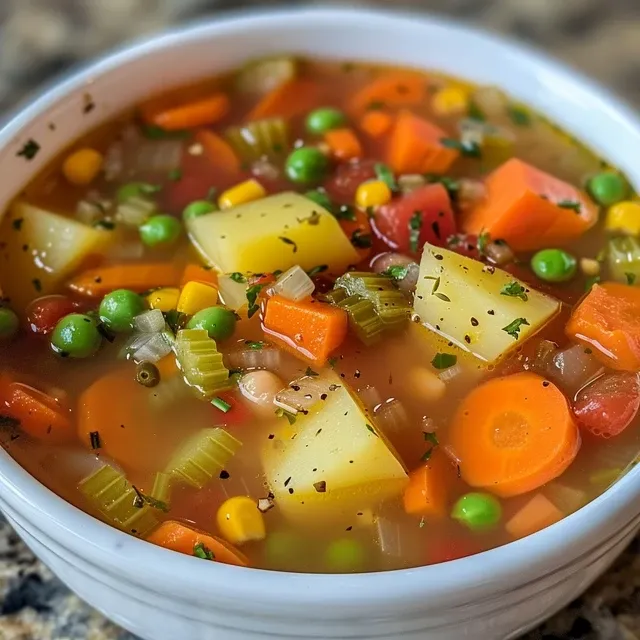
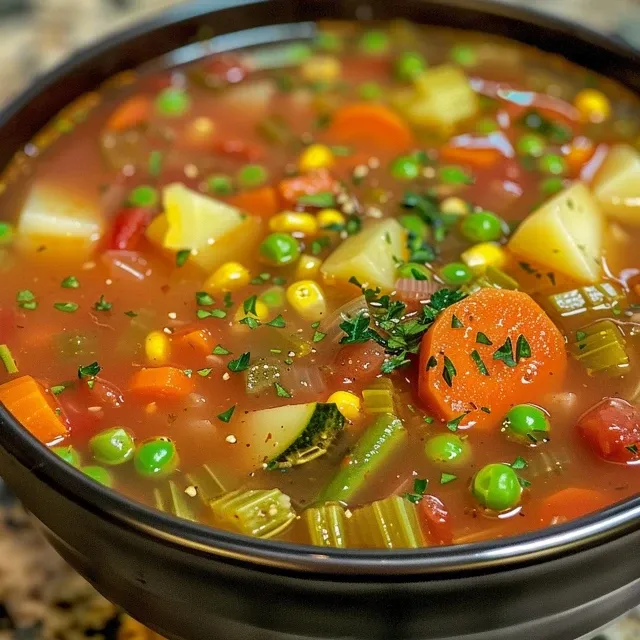
Close-up image of vegetable soup with visible diced tomatoes, corn, and parsley garnish.

Want to elevate your vegetable soup? Here are some expert insights:

  • Chop vegetables uniformly: This ensures they cook evenly and enhance the texture of the soup.
  • Sauté aromatics: Always start by sautéing onions and garlic to build a flavorful base.
  • Don’t rush the simmer: Allow the soup to simmer gently; this deepens the flavors.
  • Try adding a splash of vinegar: It adds brightness and lifts the flavors beautifully.
  • Adjust seasoning at the end: Taste and adjust salt and pepper after the soup has simmered for the best flavor.
  • Blend for a creamy texture: If you prefer a creamier soup, blend half of it and then stir it back in.
  • Use homemade broth: If you have the time, homemade broth enhances the depth of flavor.
  • Garnish beautifully: Fresh herbs or a drizzle of olive oil can make your soup visually appealing.

Common Mistakes and Troubleshooting

Even simple recipes can have their hiccups! Here’s how to avoid common mistakes:

  • Overcooking the vegetables: Keep an eye on cooking times to maintain texture.
  • Not seasoning enough: Don’t skimp on salt; it’s crucial for flavor.
  • Skipping the aromatics: Skipping onions and garlic can lead to a flat-tasting soup.
  • Using too much broth: Start with less broth and add more as needed for your desired consistency.

Variations of Your Vegetable Soup

Feel free to customize this soup to your liking! Here are some delicious variations:

  • Add protein: Incorporate shredded chicken, beans, or lentils for a heartier meal.
  • Spicy kick: Add red pepper flakes or diced jalapeños for some heat.
  • Asian twist: Use ginger, soy sauce, and sesame oil for an Asian-inspired flavor.
  • Herb-infused: Swap the Italian herbs for fresh basil or cilantro for a fresh twist.

Storage and Make-Ahead Instructions

This soup stores beautifully! Here’s how to keep it fresh:

  • Refrigerator: Store in an airtight container for up to 4 days.
  • Freezer: Freeze in portions for up to 3 months. Thaw overnight in the fridge before reheating.
  • Make-ahead: You can prep all your ingredients a day in advance. Just sauté and simmer when you’re ready to eat!

Frequently Asked Questions

Here are some common questions and answers about making vegetable soup:

  • Can I use frozen vegetables? Yes! Frozen vegetables are a great time-saver and work well in this recipe.
  • How can I thicken my soup? Blend a portion of the soup or add a cornstarch slurry for extra thickness.
  • Is vegetable soup healthy? Absolutely! It’s packed with vitamins, minerals, and is low in calories.
  • Can I make this in a slow cooker? Yes! Sauté the aromatics first, then add everything to the slow cooker and cook on low for 6-8 hours.
  • What can I serve with vegetable soup? Pair it with crusty bread, a fresh salad, or grilled cheese for a complete meal.
  • Can I use water instead of broth? Yes, but using broth adds much more flavor.
  • How do I make this soup vegan? Ensure all ingredients, especially the broth, are plant-based.
  • Can I add pasta or rice? Yes! Just add them in the last 10-15 minutes of cooking.

Nutritional Tips and Dietary Adaptations

This soup is naturally low in calories and packed with nutrients. Here are some tips for different diets:

  • Gluten-Free: Use gluten-free pasta or omit grains entirely.
  • Low-Carb: Opt for more non-starchy vegetables like zucchini or cauliflower.
  • Rich in Fiber: The variety of vegetables ensures a high fiber content, promoting digestive health.

Equipment Recommendations

To make this soup, here’s what I recommend:

  • Large pot: A sturdy pot for even cooking.
  • Cutting board and knife: For prepping your veggies.
  • Measuring cups and spoons: For precise ingredient measurements.

Serving Suggestions

Serve your vegetable soup with:

  • Crusty bread: Perfect for dipping and soaking up the flavors.
  • Fresh herbs: A sprinkle of parsley or basil adds freshness.
  • A drizzle of olive oil: Enhances flavor and adds richness.

Now that you have all the tools and tips to make the best vegetable soup, it’s time to get cooking! Remember, cooking is about creativity and enjoyment—so don’t stress about perfection. Enjoy the process, and let this hearty soup warm your heart and your home!

Easy Vegetable Soup - Alrightwithme

Prep Time 15 minutes
Cook Time 30 minutes
Total Time 45 minutes
Servings 6 servings
Calories 180
A hearty and healthy vegetable soup perfect for a quick, nutritious meal. Packed with fresh vegetables and flavorful herbs, it's easy to make and satisfying.

Ingredients

Vegetables

  • 2 tbsp extra virgin olive oil
  • 1 medium onion, diced
  • 4 medium carrots, peeled and sliced
  • 3 stalks celery, sliced
  • 4 cloves garlic, minced
  • 2 tsp italian herb blend
  • 1 tsp kosher salt
  • 0.5 tsp ground black pepper
  • 3 potatoes yukon gold potatoes, peeled and diced
  • 1.5 cups chopped fresh green beans
  • 2 cans (14.5 oz each) diced tomatoes
  • 2 bay leaves bay leaves
  • 6 to 8 cups low-sodium vegetable broth
  • 1 cup frozen corn kernels
  • 1 cup frozen green peas
  • 2 to 3 tbsp freshly squeezed lemon juice
  • 1/4 cup finely chopped fresh parsley

Instructions 

  • Heat olive oil in a large pot over medium heat. Add diced onion, carrots, celery, and garlic; sauté until softened.
  • Add potatoes, green beans, diced tomatoes, bay leaves, herbs, salt, and pepper. Pour in vegetable broth and bring to a boil.
  • Reduce heat and simmer for 20-25 minutes until vegetables are tender.
  • Stir in frozen corn, peas, and lemon juice; cook for another 5 minutes.
  • Remove bay leaves, garnish with parsley, and serve hot.

Notes

For extra flavor, add a splash of balsamic vinegar before serving.
Calories: 180kcal
Cost: $15
Course: Soup
Cuisine: American
Keyword: Vegetables

Welcome to Your New Favorite Recipe: Mediterranean Chicken Tray Bake

Are you ready to transform your weeknight dinners into something extraordinary? Look no further than this Mediterranean Chicken Tray Bake, a delightful one-pan meal that brings together juicy chicken thighs, vibrant vegetables, and tasty feta cheese. Perfect for busy evenings, this dish not only simplifies your cooking but also satisfies your taste buds with its rich Mediterranean flavors. Let’s dive into why this recipe will become a staple in your kitchen!

  • Effortless Preparation: Simply toss everything into a baking dish and let the oven do the work.
  • Flavor Explosion: The combination of spices and fresh ingredients creates a dish that’s bursting with flavor.
  • Healthy & Nutritious: Packed with proteins and vegetables, it’s a meal that’s good for you.
  • One-Pan Wonder: Less cleanup means more time to enjoy your meal and relax.
  • Customizable: Easily adapt the recipe with your favorite vegetables and seasonings.

Ingredient Breakdown: What You’ll Need

Let’s gather everything you need for this delicious dish. Here’s a comprehensive list of ingredients, along with some substitution suggestions to make this recipe truly yours.

  • Chicken Thighs (1 Kg): Skin-on for juiciness. You can use boneless thighs for a quicker cook time.
  • Lemon Juice (from 1 Lemon): Adds brightness. Fresh is best, but bottled lemon juice works in a pinch.
  • Garlic (6 cloves, in skins): Roasting with skins enhances flavor. Feel free to add more if you love garlic!
  • Dried Oregano (1 tbsp): Essential for Mediterranean flavor. You can substitute with Italian seasoning.
  • Smoked Paprika (1 tbsp): Offers a subtle smokiness. Regular paprika is a fine alternative.
  • Cumin Powder (1 tbsp): Adds warmth. Coriander can be used if you want a different flavor profile.
  • Cinnamon Powder (1 tsp): This unique spice enhances depth. You can skip it if you prefer.
  • Olive Oil (3 tbsp): For richness. Any cooking oil will work, but olive oil is recommended for taste.
  • Salt and Pepper: To taste, essential for bringing out flavors.
  • Chicken Stock (4 tbsp): Keeps everything moist. You can use vegetable stock as a vegetarian option.
  • Baby Potatoes (1 lb, halved): They roast beautifully. Substitute with sweet potatoes for a different taste.
  • Red Pepper (1 large, cut into strips): Sweet and colorful. Feel free to use any bell pepper.
  • Red Onion (1, cut into wedges): Adds sweetness when caramelized. Yellow onions can also work.
  • Cherry Tomatoes (a handful): Juicy and flavorful. Substitute with regular tomatoes if needed.
  • Lemon (cut into wedges): For added zing.
  • Feta (200 grams, cubed): Creamy and tangy. You can use goat cheese for a different flavor.
  • Olives (60 grams): For a briny kick. Any olives will do, but Kalamata is traditional.

How to Make This Mediterranean Chicken Tray Bake

Let’s break down the cooking process into simple, doable steps. You’ll find that making this dish is not only easy but also incredibly satisfying!

  1. Combine all the ingredients for the chicken marinade in a large bowl. Tip: Marinating for at least 30 minutes can enhance the flavors significantly.
  2. Preheat your oven to gas mark 6 (200°C).
  3. Add the chicken to a large roasting tin or baking dish, along with red onions, peppers, cherry tomatoes, potatoes, garlic, and chicken stock.
  4. Cover the tin with foil and bake for 55 minutes.
  5. Remove the tray from the oven and add the feta and olives. Bake uncovered for an additional 20-25 minutes until everything is beautifully roasted and the chicken is cooked through.

Pro Tips for Perfecting Your Tray Bake

Want to ensure your Mediterranean Chicken Tray Bake turns out perfectly? Here are some expert insights to keep in mind:

  • Marinate Longer: If you have time, marinate the chicken overnight to deepen the flavor.
  • Use Fresh Herbs: Fresh oregano or thyme can elevate the dish even more.
  • Check Chicken Temperature: Ensure the chicken reaches an internal temperature of 75°C (165°F) for safety.
  • Customize Veggies: Feel free to add or substitute vegetables based on what you have on hand.
  • Don’t Skip the Foil: Covering the dish helps the chicken stay moist during baking.
  • Let It Rest: Allow the tray bake to rest for a few minutes before serving for better flavor integration.
  • Serve with Bread: A crusty loaf is perfect for soaking up the delicious juices.
  • Garnish: Fresh parsley or basil adds a beautiful touch and extra flavor.

Common Mistakes and How to Avoid Them

Cooking should be fun, but common pitfalls can lead to frustration. Here are some mistakes to watch out for and how to avoid them:

  • Overcrowding the Pan: This can lead to uneven cooking. If needed, use two baking dishes.
  • Not Preheating the Oven: Always preheat for even cooking and optimal texture.
  • Skipping the Marinade: Marinating enhances flavor. Don’t rush this step!
  • Ignoring Cooking Times: Keep an eye on your dish to avoid overcooking.

Variations to Try

One of the best parts about this Mediterranean Chicken Tray Bake is its versatility. Here are a few variations you might enjoy:

  • Spicy Kick: Add red pepper flakes or diced jalapeños for heat.
  • Vegetarian Version: Substitute chicken with hearty vegetables like eggplant or zucchini.
  • Herbed Version: Use different herbs like rosemary or dill for a fresh twist.
  • Cheesy Delight: Mix in mozzarella or a blend of cheeses for an extra creamy texture.

Storage and Make-Ahead Instructions

If you want to prepare your meal in advance or save leftovers, here’s how to store your Mediterranean Chicken Tray Bake:

  • Fridge: Store in an airtight container for up to 3 days.
  • Freezer: This dish can be frozen for up to 2 months. Thaw in the fridge before reheating.
  • Reheating: Warm in the oven at 180°C (350°F) for best results, or use the microwave if short on time.

Frequently Asked Questions

Here are some common questions you might have about this recipe:

  • Can I use other cuts of chicken? Absolutely! Bone-in chicken breasts work well too.
  • What if I don’t have olives? You can omit them or substitute with capers.
  • Can I make this dish ahead of time? Yes, you can prepare everything up to the baking step and refrigerate it.
  • What can I serve with this? This dish pairs well with rice, couscous, or a simple green salad.
  • Is this dish gluten-free? Yes, all the ingredients are gluten-free.
  • How can I enhance the flavor? Add additional herbs or spices based on your taste preferences.
  • Can I use frozen vegetables? Fresh is best, but frozen veggies can work if thawed and drained first.
  • What’s the best way to store leftovers? Keep in an airtight container in the fridge for up to 3 days.

Nutritional Tips and Dietary Adaptations

This Mediterranean Chicken Tray Bake is not only delicious but also adaptable for various dietary needs:

  • Low-Carb Option: Substitute potatoes with cauliflower for a lower-carb meal.
  • Dairy-Free Version: Omit feta or use a dairy-free cheese alternative.
  • Low-Sodium: Use low-sodium chicken stock and limit added salt.

Equipment Recommendations

To make this Mediterranean Chicken Tray Bake, you’ll need a few essential kitchen tools:

  • Large Mixing Bowl: For marinating the chicken and mixing ingredients.
  • Roasting Tin or Baking Dish: A deep dish is best for all the veggies and chicken.
  • Measuring Cups and Spoons: For accurate ingredient measurements.
  • Aluminum Foil: To cover the dish while baking for moisture retention.

Serving Suggestions

When it comes to serving this Mediterranean Chicken Tray Bake, consider these delightful ideas:

  • Fresh Salad: A light arugula salad with lemon vinaigrette complements the dish beautifully.
  • Crusty Bread: Serve with a loaf of bread for sopping up the delicious juices.
  • Wine Pairing: A crisp white wine, like Sauvignon Blanc, pairs well with the flavors.

In conclusion, this Mediterranean Chicken Tray Bake is more than just a meal; it’s a celebration of flavors and a testament to easy home cooking. With simple steps and a dash of creativity, you can enjoy a delightful dish that’s sure to impress. Remember, cooking is about enjoying the process and sharing great food with those you love. So lace up your apron, gather your ingredients, and let’s make something delicious together!

Mediterranean Chicken Tray Bake with Potatoes, Olives, Pepper and Feta

Prep Time 15 minutes
Cook Time 1 hour 15 minutes
Total Time 1 hour 30 minutes
Servings 4 servings
Calories 650
A flavorful and hearty one-pan dish combining tender chicken, roasted vegetables, olives, and feta for a satisfying meal.

Ingredients

Protein

  • 1 kg Chicken Thighs (Skin on)
  • 1 pcs Lemon (Juice only)
  • 6 cloves Garlic (in Skins)

Spices and Herbs

  • 1 tbsp Dried Oregano
  • 1 tbsp Smoked Paprika
  • 1 tbsp Cumin Powder
  • 1 tsp Cinnamon Powder

Oils and Liquids

  • 3 tbsp Olive Oil
  • 4 tbsp Chicken Stock

Salt and Pepper

  • to taste Salt and Pepper
  • 1 lb Baby Potatoes (Cut in half)
  • 1 large Red Pepper (Cut into thick strips)
  • 1 large Red Onion (Cut into wedges)
  • Handful Cherry Tomatoes
  • 1 large Lemon (cut into wedges)
  • 200 grams Feta (Cut into large cubes)
  • 60 grams Olives

Instructions 

  • Combine marinade ingredients in a large bowl and marinate chicken for 30 minutes or overnight.
  • Preheat oven to 200°C (Gas Mark 6).
  • Place chicken, vegetables, garlic, and stock in a roasting tin. Cover with foil and bake for 55 minutes.
  • Remove from oven, add feta and olives, then bake uncovered for 20-25 minutes.

Notes

For extra flavor, marinate the chicken longer and serve with fresh herbs.
Calories: 650kcal
Cost: $15
Course: Main Course
Cuisine: Mediterranean
Keyword: Chicken

Welcome to the World of Cottage Cheese Carrot Cake Bars!

Are you ready to indulge in a delightful treat that marries the wholesome goodness of cottage cheese with the classic flavors of carrot cake? These cottage cheese carrot cake bars are not only delicious but also packed with nutrients, making them an excellent choice for a quick snack or a satisfying dessert. In this comprehensive guide, we will break down everything you need to know about making these bars—from ingredients and instructions to tips for perfecting the recipe. Let’s dive into the joy of baking!

Why You’ll Love This Recipe

  • Nutritious Ingredients: Made with high-protein cottage cheese and wholesome carrots, these bars are a guilt-free treat.
  • Easy to Make: With simple steps and minimal prep time, you’ll have these bars ready in no time.
  • Versatile Options: Customize your bars with various add-ins like nuts, dried fruit, or spices to suit your taste.
  • Perfect for Meal Prep: These bars store well, making them a great option for a week’s worth of snacks or desserts.
  • Kid-Friendly: The subtly sweet flavor and fun texture make these bars a hit with kids and adults alike!

Ingredients for Cottage Cheese Carrot Cake Bars

Gathering the right ingredients is crucial for achieving the best results. Here’s what you’ll need:

  • 1 cup cottage cheese: This ingredient provides moisture and a creamy texture.
  • 2 large eggs: Essential for binding the mixture and adding structure.
  • ½ cup almond flour (or oat flour): Almond flour adds a nutty flavor, while oat flour offers a gluten-free option.
  • ½ cup grated carrot: Freshly grated carrots bring sweetness and nutrition.
  • 2–3 tbsp maple syrup or honey (optional): For added sweetness, adjust according to your preference.
  • 1 tsp vanilla extract: Enhances the overall flavor profile.
  • ½ tsp baking powder: Helps the bars rise and become fluffy.
  • ¼ tsp cinnamon: Adds a warm spice that complements the carrots.
  • Pinch of salt: Balances the sweetness.
  • Optional: 2–3 tbsp chopped walnuts or pecans: For added texture and flavor.

How to Make Cottage Cheese Carrot Cake Bars

Follow these straightforward steps to create your bars:

  1. Preheat your oven to 350°F (175°C). Line an 8×8-inch baking dish with parchment paper or lightly grease it.
  2. Whisk together the cottage cheese, eggs, maple syrup (if using), and vanilla in a bowl until smooth.
  3. Combine dry ingredients: Add the almond or oat flour, baking powder, cinnamon, salt, and grated carrot. Stir until well combined. If you’re using nuts, fold them in gently.
  4. Pour the batter into the prepared dish and smooth the top with a spatula.
  5. Bake for 25–30 minutes until the surface is set and a toothpick inserted in the center comes out mostly clean.
  6. Cool for at least 10 minutes before slicing into 9 bars.

Pro Tips for Perfect Cottage Cheese Carrot Cake Bars

To ensure your bars turn out perfectly every time, consider these expert insights:

  • Use fresh ingredients: Fresh carrots and quality cottage cheese can significantly enhance the flavor and texture.
  • Don’t overmix: When combining wet and dry ingredients, mix just until incorporated to keep the bars light.
  • Adjust sweetness: Taste the batter before baking; you can always add more sweetener if you prefer sweeter bars.
  • Check for doneness: Ovens vary, so keep an eye on your bars during the last few minutes of baking.
  • Let cool completely: This helps the bars set and makes them easier to slice.
  • Experiment with spices: Feel free to add nutmeg, ginger, or cardamom for a more complex flavor.
  • Use parchment paper: This makes it easier to lift the bars out of the pan for slicing.
  • Store properly: Keep them in an airtight container to maintain freshness.
  • Freeze for later: These bars freeze well, making them a convenient option for busy days.

Common Mistakes and Troubleshooting

Even the best home cooks can run into issues. Here are some common pitfalls and how to avoid them:

  • Bars are too dry: Ensure you’re measuring ingredients accurately, especially the flour.
  • Too crumbly: This can occur if you overbake. Keep an eye on the time and check for doneness.
  • Flavor is bland: Don’t skip the spices! They are essential for enhancing the overall taste.
  • Bars stick to the pan: Always line your baking dish or grease it well to prevent sticking.

Variations on Cottage Cheese Carrot Cake Bars

Feeling adventurous? Here are some fun variations to try:

  • Chocolate Chip Carrot Cake Bars: Add ½ cup of chocolate chips to the batter for a decadent twist.
  • Spiced Carrot Cake Bars: Mix in ½ tsp of ground ginger and nutmeg for a warm, spiced flavor.
  • Fruit-Loaded Bars: Incorporate ½ cup of crushed pineapple or applesauce for added moisture and sweetness.
  • Nut-Free Version: Substitute almond flour with oat flour and skip the nuts for a nut-free treat.

How to Store and Make Ahead

Planning ahead? Here’s how to store your bars for maximum freshness:

  • Refrigerate: Store in an airtight container in the fridge for up to 5 days.
  • Freeze: These bars freeze beautifully! Wrap them individually in plastic wrap and store in a freezer-safe bag for up to 3 months.
  • Make ahead: Prepare the batter and store it in the fridge overnight before baking for a quick morning treat.

Frequently Asked Questions

Here are answers to some common questions you might have:

  • Can I make these bars gluten-free? Yes, use oat flour instead of almond flour.
  • How do I know when the bars are done? The surface should be set, and a toothpick should come out clean or with few crumbs.
  • Can I skip the sweetener? Absolutely! The natural sweetness from carrots can be enough for some.
  • What’s the best way to grate the carrots? A box grater or food processor works best for uniform pieces.
  • Can I double the recipe? Yes, simply use a larger baking dish and adjust the baking time accordingly.
  • Are these bars suitable for breakfast? Definitely! They’re a nutritious option to kickstart your day.
  • Can I add protein powder? Yes, just reduce the flour slightly to maintain consistency.
  • What can I serve with these bars? They pair wonderfully with a dollop of Greek yogurt or a drizzle of nut butter.

Nutritional Tips and Dietary Adaptations

These bars are not only delicious but also versatile for various dietary needs:

  • Protein-Rich: The cottage cheese provides a great source of protein, making these bars filling.
  • Low Sugar: With the option to reduce or eliminate added sweeteners, they can fit into low-sugar diets.
  • Vegetarian-Friendly: These bars are perfect for vegetarians looking for a nutritious snack.
  • Dairy-Free Option: Substitute cottage cheese with a plant-based yogurt for a dairy-free version.

Equipment Recommendations

Here’s a quick list of equipment that will make your baking experience smooth:

  • Mixing bowls: A set of various sizes for mixing ingredients.
  • Whisk: Essential for combining wet ingredients.
  • Baking dish: An 8×8-inch pan is perfect for this recipe.
  • Parchment paper: For easy removal of the bars from the pan.

Serving Suggestions

Let’s talk about how to enjoy your cottage cheese carrot cake bars:

  • With Greek Yogurt: A dollop of Greek yogurt adds creaminess and protein.
  • Drizzled with Honey: A drizzle of honey enhances sweetness and adds a delightful touch.
  • As a Coffee Companion: Pair these bars with your morning coffee or afternoon tea for a perfect pick-me-up.

Conclusion

These cottage cheese carrot cake bars are not just a treat; they represent a delicious way to incorporate nutritious ingredients into your diet. With simple steps, versatile options, and a wealth of flavor, you’ll find yourself returning to this recipe time and again. So preheat your oven, gather your ingredients, and enjoy the rewarding experience of baking something truly delightful. Happy cooking!

Cottage Cheese Carrot Cake Bars

Prep Time 10 minutes
Cook Time 25 minutes
Total Time 35 minutes
Servings 9 bars
Calories 150
Delicious and healthy carrot cake bars made with cottage cheese and nuts, perfect for a quick snack or dessert.

Ingredients

Dairy and Eggs

  • 1 cup cottage cheese
  • 2 large eggs

Dry ingredients

  • ½ cup almond flour (or oat flour)
  • ½ cup grated carrot
  • 2–3 tbsp maple syrup or honey (optional)
  • 1 tsp vanilla extract
  • ½ tsp baking powder
  • ¼ tsp cinnamon
  • Pinch salt

Optional toppings

  • 2–3 tbsp chopped walnuts or pecans

Instructions 

  • Preheat oven to 350°F (175°C). Line an 8×8-inch baking dish with parchment or grease it.
  • Whisk cottage cheese, eggs, maple syrup (if using), and vanilla until smooth.
  • Add almond flour, baking powder, cinnamon, salt, and grated carrot; stir until combined. Fold in nuts if desired.
  • Pour batter into the prepared dish and smooth the top. Bake for 25–30 minutes until set.
  • Cool for 10 minutes, then slice into 9 bars and serve.

Notes

For added flavor, sprinkle with extra nuts or a drizzle of honey before serving.
Calories: 150kcal
Cost: $15
Course: Dessert
Keyword: bars, carrot, Healthy

Transform Your Weeknight Dinners with a Flavorful Caesar Chicken Bowl

Welcome to the world of easy, delicious cooking! If you’re looking for a dish that combines flavor, nutrition, and simplicity, then look no further than the Caesar Chicken Bowl. This delightful recipe features juicy grilled chicken, crisp romaine lettuce, and a creamy homemade dressing that will make your taste buds dance. In under 30 minutes, you can whip up a meal that feels like a gourmet experience right in your own kitchen!

Why You’ll Love This Recipe

  • Quick and Easy: This dish comes together in just 30 minutes, making it perfect for busy weeknights.
  • Restaurant Quality: Enjoy the taste of a classic Caesar salad elevated with tender, grilled chicken right at home.
  • Make It Your Own: With various options for toppings and dressings, you can customize it to your liking!
  • Meal Prep Friendly: Prep the ingredients ahead of time for a quick assembly during the week.
  • Health-Conscious: Packed with protein from the chicken and nutrients from the romaine, this bowl is both filling and nutritious.

Ingredient Breakdown

Let’s dive into the ingredients that make this Caesar Chicken Bowl shine. Each component plays a key role in achieving that delicious flavor profile.

  • Chicken Breasts: You’ll need 2 large boneless, skinless chicken breasts (about 1.1 lbs). Feel free to swap in grilled shrimp or tofu for a vegetarian option.
  • Olive Oil: 1 tablespoon is perfect for grilling the chicken and adding flavor.
  • Seasonings: A mix of garlic powder, dried Italian herbs, salt, and black pepper elevates the chicken’s taste. You can also experiment with smoked paprika for an extra kick!
  • Romaine Lettuce: Use 2 large heads, chopped for a crunchy base. Substitute with kale or spinach for a different texture.
  • Parmesan Cheese: Freshly grated, 1 cup will bring a rich, salty flavor. Vegan cheese can be used for a dairy-free option.
  • Croutons: About 1 1/2 cups for that crispy crunch. Make your own by toasting bread cubes with olive oil and seasoning.
  • Caesar Dressing: Made from 1/3 cup mayonnaise, additional parmesan, lemon juice, Dijon mustard, Worcestershire sauce, and minced garlic. For a lighter version, use Greek yogurt instead of mayonnaise.

Preparation Steps

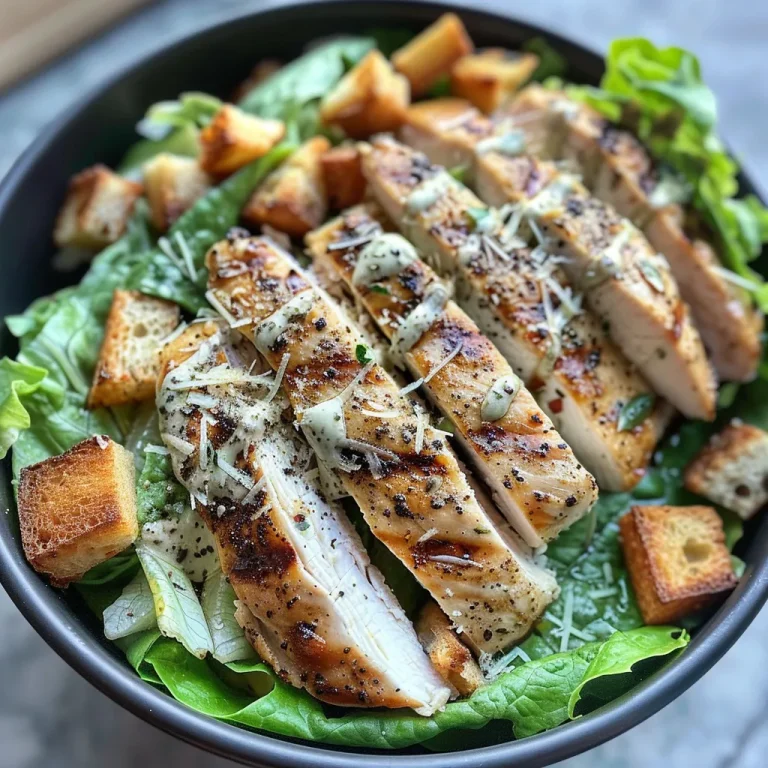
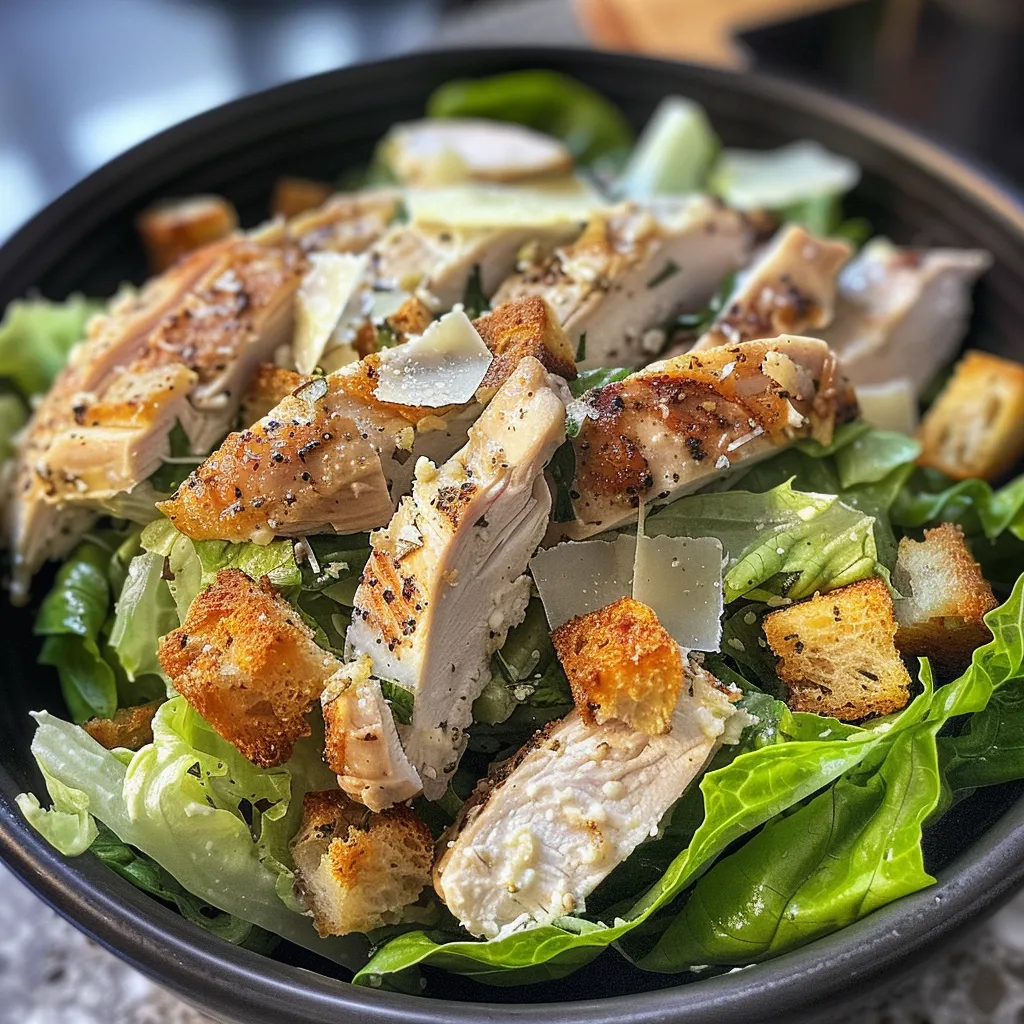
Close-up image of a Caesar Chicken Bowl filled with chicken, lettuce, croutons, and dressing.

Ready to cook? Follow these simple steps to create your Caesar Chicken Bowl:

  1. Preheat the Grill: Set your grill or grill pan to medium-high heat.
  2. Season the Chicken: Brush the chicken breasts with olive oil and season both sides with garlic powder, Italian herbs, salt, and black pepper.
  3. Grill the Chicken: Cook the chicken for 6-7 minutes per side until the internal temperature reaches 165°F. Remove from heat and let rest for 5 minutes before slicing thinly.
  4. Make the Dressing: In a small bowl, whisk together mayonnaise, parmesan, lemon juice, Dijon mustard, Worcestershire sauce, minced garlic, salt, and pepper until smooth.
  5. Toss the Lettuce: In a large salad bowl, toss chopped romaine lettuce with half of the Caesar dressing until evenly coated.
  6. Assemble the Bowls: Divide dressed lettuce among 4 bowls. Top with sliced grilled chicken, parmesan cheese, and croutons. Drizzle with more dressing as desired.
  7. Serve Immediately: For the best texture and flavor, enjoy your Caesar Chicken Bowls right away!

Pro Tips for a Perfect Bowl

  • Let the Chicken Rest: Allowing the chicken to rest after grilling keeps it juicy. Slice it thinly for better texture.
  • Customize Your Dressing: Experiment with adding capers or anchovies for a more traditional Caesar flavor.
  • Crunch Level: For extra crunch, try adding homemade croutons made from stale bread.
  • Fresh Ingredients: Use fresh, high-quality ingredients for the best taste. Local produce always shines!
  • Meal Prep: Grill several chicken breasts at once and store them for quick assembly during the week.
  • Mind the Temperature: Serve the chicken warm for optimal flavor and texture.
  • Don’t Skip the Lemon Juice: A touch of acidity from lemon juice adds brightness to the dish.
  • Use Leftovers Wisely: The chicken can be used in wraps, sandwiches, or salads for quick lunches.

Common Mistakes and Troubleshooting

Even the best of us can make mistakes in the kitchen. Here are a few common pitfalls and how to avoid them:

  • Overcooked Chicken: Keep an eye on the grill, as chicken can dry out quickly. Use a meat thermometer for accurate results.
  • Too Much Dressing: Start with a small amount of dressing to avoid soggy lettuce. You can always add more!
  • Not Resting the Chicken: Skipping the resting step can lead to dry chicken. Make sure to let it rest before slicing.
  • Unseasoned Chicken: Don’t be shy with the seasoning! A well-seasoned chicken makes all the difference.

Variations to Try

Feeling adventurous? Here are some fun variations to keep your Caesar Chicken Bowl exciting:

  • Grilled Shrimp Caesar Bowl: Swap chicken for shrimp for a seafood twist.
  • Vegetarian Version: Use grilled tofu or chickpeas instead of chicken for a plant-based option.
  • Spicy Caesar Bowl: Add sliced jalapeños or a pinch of cayenne pepper to the chicken seasoning for a kick.
  • Caesar Pasta Bowl: Toss cooked pasta into the salad for a filling twist on this classic.

Storage and Make-Ahead Instructions

This Caesar Chicken Bowl is perfect for meal prep! Here’s how to store and prepare it in advance:

  • Storage: Store leftover chicken and salad components separately in airtight containers in the fridge for up to 3 days.
  • Make-Ahead: Grill the chicken and prepare the dressing ahead of time. Assemble just before serving to keep the lettuce crisp.

Frequently Asked Questions

Here are some common questions about this recipe:

  • Can I use rotisserie chicken? Absolutely! Just shred the rotisserie chicken and add it to the salad.
  • Is this recipe gluten-free? Yes, as long as you use gluten-free croutons and check the dressing ingredients.
  • Can I make the dressing ahead of time? Yes! You can prepare the dressing up to a week in advance and store it in the fridge.
  • How do I make croutons? Cut bread into cubes, toss with olive oil and seasonings, and bake at 375°F until golden.
  • What can I serve alongside this bowl? Garlic bread, a side salad, or a light soup pair wonderfully!
  • How many servings does this recipe make? This recipe serves 4, but it can easily be halved or doubled.
  • Can I add other vegetables? Yes! Feel free to add cherry tomatoes, cucumbers, or bell peppers for extra crunch.
  • What is the best way to reheat the chicken? Reheat in the microwave or a skillet on low heat to avoid drying it out.

Nutritional Tips and Dietary Adaptations

This dish is not only delicious but can fit into various dietary lifestyles:

  • Low-Carb Option: Skip the croutons and serve over a bed of spinach instead.
  • High Protein: Add extra chicken or legumes to boost the protein content.
  • Low-Calorie Dressing: Substitute Greek yogurt for mayonnaise in the dressing for a lighter version.

Recommended Equipment

To make this Caesar Chicken Bowl, here’s what you’ll need:

  • Grill or Grill Pan: Essential for perfectly grilled chicken.
  • Meat Thermometer: To ensure your chicken is cooked to perfection.
  • Mixing Bowls: For preparing the dressing and tossing the salad.
  • Sharp Knife: For slicing the chicken and veggies.

Serving Suggestions

To complete your meal, consider these serving suggestions:

  • Add a Grain: Serve the bowl with quinoa or brown rice for a more filling option.
  • Pair with a Drink: A crisp white wine or sparkling water with lemon pairs beautifully.
  • Finish with Dessert: A light dessert, like sorbet or fruit salad, makes a perfect ending.

This Caesar Chicken Bowl is a delightful way to elevate your weeknight dinners. With its fresh ingredients, customizable options, and quick preparation, you’ll find yourself making this dish time and time again. So grab your ingredients, roll up your sleeves, and let’s get cooking!

Caesar Chicken Bowl

Prep Time 15 minutes
Cook Time 15 minutes
Total Time 30 minutes
Servings 4 servings
Calories 550
A flavorful and healthy chicken bowl featuring grilled chicken, crisp romaine, and a creamy Caesar dressing.

Ingredients

Protein

  • 2 large boneless, skinless chicken breasts (about 1.1 lbs)
  • 1 tablespoon olive oil
  • 1 teaspoon garlic powder
  • 1 teaspoon dried Italian herbs
  • 1/2 teaspoon salt
  • 1/2 teaspoon black pepper
  • 2 large romaine lettuce heads (chopped)
  • 1 cup freshly grated parmesan cheese
  • 1 1/2 cups croutons
  • 1/3 cup mayonnaise
  • 2 tablespoons grated parmesan cheese
  • 1 tablespoon lemon juice
  • 1 tablespoon Dijon mustard
  • 1 teaspoon Worcestershire sauce
  • 1 small garlic clove (minced)

Seasonings

  • to taste Salt and pepper

Instructions 

  • Preheat grill to medium-high. Brush chicken with olive oil and season with garlic powder, herbs, salt, and pepper.
  • Grill chicken 6-7 minutes per side until cooked through. Rest and slice thinly.
  • Whisk mayonnaise, parmesan, lemon juice, mustard, Worcestershire, garlic, salt, and pepper to make dressing.
  • Toss chopped romaine with half of the dressing. Divide among bowls.
  • Top with sliced chicken, parmesan, croutons, and drizzle with remaining dressing. Serve immediately.

Notes

For extra flavor, marinate chicken briefly before grilling.
Calories: 550kcal
Cost: $15
Course: Main Course
Cuisine: American
Keyword: Caesar, Chicken, Salad

Warm Up with a Hug in a Bowl: The Ultimate Creamy Tomato Basil Soup Recipe

When the chill of the evening sets in, there’s nothing quite like a bowl of creamy tomato basil soup to warm your soul. This creamy tomato basil soup is not just any soup; it’s a deliciously comforting meal that captures the essence of cozy nights in. With rich flavors and simple ingredients, you can whip it up in no time, making it an ideal choice for busy weekdays or leisurely weekends. Let’s dive into why this creamy tomato basil soup is a must-try!

Why You’ll Love This Recipe

  • Quick and Easy: In just 30 minutes, you can have a homemade soup that’s ready to serve, perfect for busy weeknights.
  • Flavor-Packed: Each spoonful is bursting with the rich flavor of ripe tomatoes and fresh basil, creating a symphony of tastes.
  • Versatile Ingredients: The recipe uses pantry staples and fresh ingredients, making it easy to adapt to what you have on hand.
  • Health Benefits: Packed with tomatoes and basil, this soup is rich in vitamins and antioxidants, making it a nourishing meal.
  • Perfect for Meal Prep: This creamy tomato basil soup is freezer-friendly, allowing you to prepare it ahead of time for quick meals.

Essential Ingredients for Your Creamy Tomato Basil Soup

To make this delicious soup, here’s what you’ll need:

  • 4 cups ripe tomatoes (fresh or canned): For the richest flavor, opt for late-summer tomatoes or high-quality canned options.
  • 1 medium yellow onion (chopped): This adds natural sweetness and depth to the soup.
  • 3 cloves garlic (minced): Garlic will elevate the dish with its aromatic punch.
  • 2 cups vegetable broth (low-sodium): A good base for the soup that enhances flavor without overpowering.
  • 1 cup heavy cream (or coconut milk): This adds creaminess; use coconut milk for a dairy-free option.
  • 2 tablespoons butter: For sautéing the onion and garlic, adding richness.
  • 1 cup fresh basil leaves (divided): Fresh basil is key for that vibrant flavor.
  • 1 teaspoon salt: To taste, enhancing all other flavors.
  • 1 teaspoon black pepper: For a gentle kick.
  • 1 teaspoon sugar (optional): Balances acidity from tomatoes.
  • 1/2 cup grated Parmesan cheese (for sprinkling): Optional garnish for additional flavor.
  • 4 slices crusty bread (for dipping): A delightful addition to your soup experience.

Step-by-Step Instructions

Delicious creamy tomato basil soup with chunks of tomato and fresh basil, accompanied by slices of bread.

Follow these simple steps to create your creamy tomato basil soup:

  1. Sauté the Aromatics: In a large pot, melt the butter over medium heat. Add the chopped onion and sauté until soft, about 5 minutes. Stir in the minced garlic and cook for an additional minute until fragrant.
  2. Combine the Ingredients: Add the tomatoes and vegetable broth to the pot. Bring the mixture to a simmer and allow it to cook for about 15 minutes. This allows the flavors to meld beautifully.
  3. Blend Until Smooth: Using an immersion blender, puree the soup until smooth. If you don’t have an immersion blender, carefully transfer the mixture to a countertop blender in batches.
  4. Add Cream and Basil: Stir in the heavy cream (or coconut milk) along with half of the fresh basil leaves. Simmer for another 5 minutes to heat through.
  5. Season to Taste: Add salt, pepper, and sugar (if using) to taste. Adjust seasoning as necessary based on your preference.
  6. Serve and Enjoy: Ladle the soup into bowls, garnish with remaining basil and a sprinkle of Parmesan cheese, and serve with crusty bread for dipping.

Pro Tips for the Best Creamy Tomato Basil Soup

  • Fresh Ingredients: Always opt for the freshest tomatoes and basil to maximize flavor.
  • Texture Preferences: For a chunkier soup, blend only half the mixture and leave the other half intact.
  • Adjust Creaminess: If you prefer a lighter soup, reduce the amount of cream or substitute with more broth.
  • Flavor Enhancements: Consider adding a pinch of red pepper flakes for a subtle heat.
  • Herb Variations: Experiment by adding herbs like thyme or oregano for different flavor profiles.
  • Serving Temperature: Serve the soup hot for the best experience. Reheating gently to avoid curdling the cream.
  • Freezing Tips: Cool the soup completely before transferring it to an airtight container. It can last up to 3 months in the freezer.
  • Perfect Pairing: A grilled cheese sandwich makes for a classic pairing with this soup.

Common Mistakes and Troubleshooting

Even the best chefs make mistakes. Here’s how to avoid common pitfalls:

  • Overcooking Garlic: Garlic can become bitter if cooked too long. Add it after the onions are softened.
  • Too Much Acid: If your soup tastes too acidic, a touch of sugar can balance it out.
  • Texture Issues: If the soup is too thick, simply add more broth or water until desired consistency is reached.
  • Insufficient Seasoning: Always taste and adjust seasoning before serving.

Delicious Variations of Tomato Basil Soup

Mix things up with these variations:

  • Spicy Tomato Basil Soup: Add a chopped jalapeño or a pinch of cayenne pepper while sautéing onions.
  • Roasted Tomato Basil Soup: Roast the tomatoes in the oven before adding them to the pot for a deeper flavor.
  • Vegetable-Loaded Soup: Incorporate carrots, celery, or bell peppers for added nutrition and texture.
  • Vegan Option: Substitute heavy cream with coconut milk and use olive oil instead of butter.

How to Store and Make Ahead

This creamy tomato basil soup is perfect for meal prep:

  • Refrigerate: Store leftovers in an airtight container for up to 5 days.
  • Freeze: Cool completely before transferring to an airtight container. It can be frozen for up to 3 months.
  • Reheat Gently: When ready to enjoy, reheat on the stove over low heat. Add a splash of broth if it’s too thick.

Comprehensive FAQ

  • Can I use dried basil instead of fresh? Yes, but use about one-third the amount, as dried herbs are more concentrated.
  • Is this soup gluten-free? Yes, as long as the broth and other ingredients are gluten-free.
  • Can I make this recipe dairy-free? Absolutely! Use coconut milk or another non-dairy milk.
  • How can I make it spicier? Add red pepper flakes or chopped fresh chili peppers to the pot.
  • What can I serve with this soup? Crusty bread, grilled cheese, or a fresh salad are great options.
  • How can I adjust the thickness of the soup? Add more broth for a thinner soup or let it simmer longer for a thicker consistency.
  • Can I use canned tomatoes? Yes, canned tomatoes are great for this recipe and often make for a richer flavor.
  • How long does it take to make? This soup can be made in approximately 30 minutes from start to finish.

Nutritional Tips and Dietary Adaptations

For those looking to enhance the nutritional value of this creamy tomato basil soup, consider these tips:

  • Add Protein: Include cooked lentils or shredded chicken for a heartier meal.
  • Boost Fiber: Add a handful of chopped spinach or kale to the mix.
  • Low-Fat Option: Use low-fat milk or a combination of milk and broth instead of heavy cream.

Essential Equipment for Making Soup

To craft this delicious soup, you’ll need:

  • Large Pot: For sautéing and simmering the soup.
  • Immersion Blender: Perfect for pureeing the soup directly in the pot.
  • Cutting Board and Knife: For chopping vegetables efficiently.
  • Measuring Cups and Spoons: Accurate measurements ensure the right balance of flavors.

Serving Suggestions

To elevate your soup experience:

  • Garnish: Add a drizzle of olive oil or a dollop of sour cream for a touch of luxury.
  • Accompaniments: Serve with a fresh salad or a platter of antipasti for a complete meal.
  • Presentation: Serve in rustic bowls for a cozy feel and enjoy with friends and family.

In conclusion, this creamy tomato basil soup is more than just a meal; it’s a comforting ritual that invites warmth and good company. With simple ingredients and easy steps, anyone can master this recipe. So gather your ingredients, roll up your sleeves, and get ready to create a soup that will become a staple in your kitchen. Happy cooking!

Best Creamy Tomato Basil Soup Recipe for Cozy Comfort Meals

Prep Time 10 minutes
Cook Time 30 minutes
Total Time 40 minutes
Servings 4 servings
Calories 250
Enjoy a warm, velvety tomato basil soup that's perfect for comforting meals on chilly days.

Ingredients

Main Ingredients

  • 4 cups ripe tomatoes (fresh or canned)
  • 1 medium yellow onion (chopped)
  • 3 cloves garlic (minced)
  • 2 cups vegetable broth (low-sodium)
  • 1 cup heavy cream (or coconut milk)
  • 2 tablespoons butter
  • 1 cup fresh basil leaves (divided)
  • 1 teaspoon salt
  • 1 teaspoon black pepper
  • 1 teaspoon sugar (optional)
  • 1/2 cup grated Parmesan cheese (for sprinkling)
  • 4 slices crusty bread (for dipping)

Instructions 

  • Sauté chopped onion and minced garlic in butter until fragrant and translucent.
  • Add tomatoes, vegetable broth, salt, pepper, and sugar; simmer for 20 minutes.
  • Blend the soup until smooth, then stir in heavy cream and chopped basil leaves.
  • Simmer for an additional 5 minutes, then serve hot topped with Parmesan cheese and basil.

Notes

For a vegan version, substitute heavy cream with coconut milk and skip Parmesan cheese.
Calories: 250kcal
Cost: $15
Course: Soup
Cuisine: American
Keyword: Basil, Tomato

Wake Up to Wholesome Goodness: Your Ultimate Guide to Healthy Banana Oat Breakfast Muffins

Start your day off right with these deliciously Healthy Banana Oat Breakfast Muffins! Packed with wholesome ingredients, they’re easy to make and bursting with flavor. Perfect for busy mornings or a nutritious snack, these muffins will not only satisfy your cravings but also provide a nutritious boost to your day. Let’s dive into the reasons why you’ll love this recipe and how to make it your own!

Why You’ll Love This Recipe

These banana oat muffins are a delightful way to kickstart your day. Here are some specific benefits:

  • Quick and Easy: Whip these up in just 30 minutes—perfect for busy mornings.
  • Healthy Ingredients: Made with natural sweeteners and whole grains, these muffins are nutritious without sacrificing taste.
  • Customizable: Add your favorite mix-ins like nuts or chocolate chips to make them truly yours.
  • Kid-Friendly: Great for breakfast or a snack, even picky eaters will love these muffins!
  • Freezable: Make a batch ahead of time and freeze for quick breakfasts anytime.

Ingredients Breakdown

Let’s take a closer look at what you’ll need to create these scrumptious muffins:

  • 2 ripe bananas: The star of the show! Make sure they’re well-mashed for natural sweetness and moisture.
  • 1 cup rolled oats: A great source of fiber, they add texture and heartiness.
  • 1 cup whole wheat flour (or gluten-free flour): Whole wheat flour enhances the muffins’ nutrition; gluten-free flour works well too!
  • 1/2 cup unsweetened applesauce: For added moisture without the extra sugar.
  • 1/4 cup honey or maple syrup: Natural sweeteners that help balance flavors.
  • 1/4 cup milk (dairy or non-dairy): Adds a bit of creaminess; choose your favorite type!
  • 1/4 cup coconut oil, melted (or any neutral oil): Ensures moist muffins while adding a slight coconut flavor.
  • 2 large eggs: Helps bind the ingredients together.
  • 1 teaspoon vanilla extract: Adds warmth and depth of flavor.
  • 1 teaspoon baking powder: Essential for helping the muffins rise.
  • 1/2 teaspoon baking soda: Works in tandem with baking powder for extra lift.
  • 1/2 teaspoon salt: Enhances all flavors.
  • 1 teaspoon cinnamon (optional): Gives a cozy flavor, perfect for breakfast.
  • 1/2 cup nuts or chocolate chips (optional): Customize your muffins with your favorite mix-ins!

Step-by-Step Instructions

Now, let’s break down the process into easy-to-follow steps:

  1. Preheat your oven: Set it to 350°F (175°C).
  2. Prepare your muffin tin: Line with paper liners or lightly grease with cooking spray.
  3. Mix wet ingredients: In a large bowl, combine the mashed bananas, applesauce, honey (or maple syrup), milk, melted coconut oil, eggs, and vanilla extract. Stir until well blended.
  4. Combine dry ingredients: In another bowl, whisk together the rolled oats, whole wheat flour, baking powder, baking soda, salt, and optional cinnamon.
  5. Combine mixtures: Gradually add the dry mixture to the wet ingredients, stirring just until combined.
  6. Add mix-ins: If using, gently fold in nuts or chocolate chips into the batter.
  7. Fill muffin cups: Spoon the batter into the prepared muffin cups, filling each about two-thirds full.
  8. Bake: Place the muffin tin in the preheated oven and bake for 18-20 minutes, or until a toothpick comes out clean.
  9. Cool: Once baked, remove the muffins from the oven and let them cool in the tin for about 5 minutes. Then transfer them to a wire rack to cool completely.

Pro Tips for Perfect Muffins

To ensure your banana oat muffins turn out perfectly, keep these expert tips in mind:

  • Use super ripe bananas: The riper the bananas, the sweeter and more flavorful your muffins will be.
  • Don’t overmix: Mix just until combined to keep the muffins light and fluffy.
  • Check for doneness: Use a toothpick; it should come out clean or with a few crumbs.
  • Let cool before eating: This helps the muffins set and enhances their texture.
  • Experiment with spices: Feel free to add nutmeg or ginger for an extra flavor kick!
  • Try different flours: Almond flour or oat flour can be used for unique textures.
  • Adjust sweetness to taste: Feel free to reduce or increase the honey/maple syrup based on your preference.
  • Store properly: Keep in an airtight container to maintain freshness.

Common Mistakes and Troubleshooting

Here are some common pitfalls and how to avoid them:

  • Dry muffins: This can happen if you overbake or use too much flour. Measure accurately and keep an eye on baking time.
  • Dense texture: Overmixing the batter can lead to dense muffins. Mix gently!
  • Not enough flavor: Ensure your bananas are ripe and don’t skip the vanilla or spices!
  • Uneven baking: Make sure your oven is preheated and test with an oven thermometer for accuracy.

Delicious Variations

Feeling adventurous? Here are some delightful variations to try:

  • Nutty Banana Oat Muffins: Add 1/2 cup of chopped walnuts or almonds for a crunchy texture.
  • Chocolate Chip Banana Muffins: Fold in 1/2 cup of dark chocolate chips for a sweet treat.
  • Berry Banana Muffins: Toss in 1/2 cup of blueberries or raspberries for a fruity twist.
  • Spiced Banana Muffins: Add 1/2 teaspoon of nutmeg or ginger for a cozy flavor profile.

Storage and Make-Ahead Instructions

These muffins are perfect for meal prep! Here’s how to store and enjoy them later:

  • Room temperature: Store in an airtight container for up to 3 days.
  • Refrigerator: If you want them to last longer, store in the fridge for up to a week.
  • Freezing: Freeze in a zip-top bag for up to 3 months. Thaw overnight in the fridge or pop in the microwave for a quick snack.

Frequently Asked Questions (FAQs)

Here are some common questions about making these delicious muffins:

  • Can I make these muffins vegan? Yes! Substitute eggs with flax eggs and use plant-based milk and oil.
  • How can I make these muffins gluten-free? Use certified gluten-free oats and a gluten-free flour blend.
  • Can I skip the sugar completely? You can reduce the honey/maple syrup or use a sugar substitute, but the texture may vary.
  • What can I use instead of coconut oil? Any neutral oil, such as canola or vegetable oil, works well as a substitute.
  • Can I use quick oats instead of rolled oats? Yes, but rolled oats provide a heartier texture.
  • How do I know when the muffins are done? They are done when a toothpick inserted comes out clean or with a few moist crumbs.
  • Can I add protein powder? Yes! Just reduce the flour slightly to accommodate the protein powder.
  • Are these muffins suitable for a low-carb diet? They are not low-carb but can be adapted using almond flour and sugar alternatives.

Nutritional Benefits and Dietary Adaptations

These muffins provide a balanced mix of carbohydrates, fiber, protein, and healthy fats. Here’s a quick rundown:

  • High in Fiber: Thanks to oats and whole wheat flour, these muffins promote digestive health.
  • Low in Added Sugars: Sweetened naturally with bananas and a touch of honey, they’re a healthier option.
  • Protein-Rich: Eggs and optional nuts provide a good source of protein to keep you full.
  • Customizable for Dietary Needs: Easily adapt to gluten-free, vegan, or low-sugar diets.

Essential Equipment Recommendations

To make the process smoother, here’s a list of equipment you’ll need:

  • Muffin tin: A standard 12-cup muffin tin is essential for perfect muffins.
  • Mixing bowls: Use both large and medium bowls for mixing wet and dry ingredients.
  • Measuring cups and spoons: Accurate measurements are key for baking success.
  • Whisk: A whisk or fork is great for blending wet ingredients and dry ingredients together.
  • Spatula: A rubber spatula is handy for folding in mix-ins and scraping the bowl.

Serving Suggestions

Enjoy your banana oat muffins in various delightful ways:

  • With a spread: Try them with almond butter or cream cheese for extra flavor.
  • As a snack: Perfect as a portable snack for kids and adults alike!
  • With yogurt: Pair with Greek yogurt and fresh fruit for a wholesome breakfast.
  • With a warm beverage: Enjoy them with a cup of coffee or tea for a cozy treat.

Final Thoughts

These Healthy Banana Oat Breakfast Muffins not only make for a quick and nutritious breakfast but also provide endless opportunities for customization. With simple ingredients and easy-to-follow steps, you’ll feel confident whipping up a batch in no time. Remember, cooking is about creativity and enjoyment, so don’t hesitate to experiment with flavors and ingredients. Happy baking, and enjoy your delicious muffins!

Healthy Banana Oat Breakfast Muffins

Prep Time 10 minutes
Cook Time 20 minutes
Total Time 30 minutes
Servings 12 muffins
Calories 180
Start your day with these nutritious and delicious banana oat muffins, perfect for a quick breakfast or snack.

Ingredients

Wet ingredients

  • 2 pieces ripe bananas, mashed
  • 1 cup rolled oats
  • 1 cup whole wheat flour (or gluten-free flour)
  • 1/2 cup unsweetened applesauce
  • 1/4 cup honey or maple syrup
  • 1/4 cup milk (dairy or non-dairy)
  • 1/4 cup coconut oil, melted (or any neutral oil)
  • 2 large eggs
  • 1 teaspoon vanilla extract

Dry ingredients

  • 1 teaspoon baking powder
  • 1/2 teaspoon baking soda
  • 1/2 teaspoon salt
  • 1 teaspoon cinnamon (optional)
  • 1/2 cup nuts or chocolate chips (optional)

Instructions 

  • Preheat oven to 350°F (175°C) and prepare muffin tin.
  • Mix wet ingredients: bananas, applesauce, honey, milk, oil, eggs, vanilla.
  • Combine dry ingredients: oats, flour, baking powder, baking soda, salt, cinnamon.
  • Mix dry into wet until just combined; fold in nuts or chocolate chips if using.
  • Spoon batter into muffin cups, bake for 18-20 minutes, then cool.

Notes

Store in an airtight container for up to 3 days or freeze for longer storage.
Calories: 180kcal
Cost: $15
Course: Breakfast
Keyword: Banana, Healthy, muffins

Brighten Your Plate with Healthy Vegetable Pasta Primavera

If you’re on the lookout for a fresh, vibrant dish that can turn any ordinary weeknight dinner into something special, you’ve landed in the right spot! Our Healthy Vegetable Pasta Primavera is not only quick to prepare but is also bursting with flavors from seasonal vegetables. This recipe is a harmonious blend of al dente pasta, crisp-tender veggies, and a light, zesty sauce that will leave you feeling satisfied without the heaviness. Let’s dive into why this dish deserves a spot on your dinner table!

Why You’ll Love This Recipe

  • Quick and Easy: This dish comes together in under 30 minutes, making it perfect for busy nights.
  • Flavor-Packed: The combination of fresh vegetables and zesty lemon zest creates a flavor explosion.
  • Customizable: Use any seasonal vegetables you have on hand—it’s a great way to clean out your fridge!
  • Healthful Ingredients: Loaded with nutrients, this pasta is a guilt-free indulgence that won’t weigh you down.
  • Perfect for Meal Prep: Make extra to have delicious leftovers ready for lunch the next day!

Ingredient Breakdown

Let’s take a closer look at what goes into this delightful dish and how you can customize it:

  • 12 oz bronze-cut spaghetti: This type of pasta holds onto the sauce beautifully. Feel free to substitute with gluten-free pasta if needed.
  • 3/4 cup rainbow carrots, julienned: These add both color and sweetness. Regular carrots work too!
  • 1 cup asparagus, diagonally cut: Tender asparagus spears add a delightful crunch. Substitute with green beans or zucchini if preferred.
  • 2 tsp lemon zest: This brightens the dish and enhances the flavor. Don’t skip this step!
  • 1/4 cup nutritional yeast: A cheesy flavor without dairy—perfect for vegan diets!
  • 3 tbsp toasted pine nuts: These add a nutty, rich flavor. You can replace them with walnuts or omit them entirely for a nut-free version.
  • 1/3 cup cold-pressed EVOO: Essential for the sauce, this olive oil adds richness and depth.
  • 1.5 cups reserved pasta water: This starchy water helps emulsify the sauce, making it creamy without the need for heavy cream.

Step-by-Step Instructions

Delicious and nutritious vegetable pasta primavera with lemon zest and toasted pine nuts.

Ready to cook? Follow these simple steps for a flawless dish:

  1. Boil 4 quarts of water with 2 tbsp kosher salt—make it as salty as the sea for the best flavor.
  2. Sear the julienned carrots in 1 tbsp of olive oil for about 3 minutes until they develop blistering spots.
  3. Add the asparagus and snap peas; sauté for exactly 90 seconds to keep them crisp and vibrant.
  4. Cook the spaghetti for 2 minutes less than the package instructions to keep it al dente.
  5. Before draining, reserve 2 cups of that starchy pasta water—it’s your secret weapon for a creamy sauce.
  6. In the skillet, combine the pasta, sautéed veggies, and 1 cup of reserved pasta water over medium-low heat.
  7. Toss continuously for 3-4 minutes until the sauce emulsifies and coats everything beautifully.
  8. Off the heat, mix in the lemon zest, fresh herbs, and remaining olive oil for that final touch.
  9. Finish with toasted pine nuts and optional cheese or miso for added flavor.

Pro Tips for Perfection

  • Use seasonal vegetables: They are fresher and more flavorful—plus, it’s a great way to support local farmers!
  • Don’t skip the pasta water: This is crucial for achieving the right sauce consistency. It’s like liquid gold!
  • Keep it colorful: Mix and match your veggies for a stunning presentation that’s as good to look at as it is to eat.
  • Experiment with herbs: Fresh basil, parsley, or thyme can elevate the flavors even more.
  • Don’t overcook the veggies: You want them to be crisp-tender, providing a nice contrast to the pasta.
  • Perfect your timing: Have everything prepped and ready to go before you start cooking to keep things running smoothly.
  • Garnish with flair: A sprinkle of additional nutritional yeast or a squeeze of fresh lemon juice adds a lovely finishing touch.
  • Save leftovers: This pasta keeps well in the fridge for 2-3 days, making it an excellent meal prep option.

Common Mistakes & Troubleshooting

Even the most seasoned cooks can run into issues. Here’s how to avoid common pitfalls:

  • Sauce won’t emulsify: If your sauce is too thin, add a little more reserved pasta water while tossing to help it come together.
  • Veggies too soft: If they become mushy, reduce your sautéing time next time. You want them to retain their crunch!
  • Pasta overcooked: Always check the pasta a minute or two before the suggested time to ensure it’s al dente.
  • Lack of flavor: Don’t forget to season each layer of the dish as you go. Salt in the water, sautéing veggies, and final seasoning matter!

Variations to Try

Feeling adventurous? Here are some fun twists on this classic:

  • Add protein: Incorporate grilled chicken, shrimp, or chickpeas for a heartier meal.
  • Spice it up: Add red pepper flakes or a drizzle of sriracha for a kick of heat.
  • Make it creamy: Stir in a dollop of Greek yogurt or vegan cream cheese for a richer sauce.
  • Switch up the pasta: Use whole wheat, gluten-free, or spiralized veggies for a fun twist.

Storage & Make-Ahead Instructions

This dish is perfect for meal prepping! Here’s how to store and reheat it:

  • Refrigerate: Store leftovers in an airtight container for up to 3 days.
  • Freeze: This dish can be frozen for up to 2 months. Just thaw in the fridge overnight before reheating.
  • Reheat: Warm gently on the stovetop with a splash of reserved pasta water to loosen up the sauce.

Frequently Asked Questions

  • Can I use other vegetables? Absolutely! Any seasonal or favorite veggies will work well here.
  • Is this recipe vegan? Yes, it’s naturally vegan if you skip the cheese or use nutritional yeast instead.
  • What can I serve with it? Pair with a light salad or crusty bread for a complete meal.
  • How can I change the flavor profile? Experiment with different herbs and spices to tailor the dish to your taste.
  • Can I make this gluten-free? Yes! Just substitute the pasta with your favorite gluten-free variety.
  • How do I prevent the pasta from sticking? Stir the pasta frequently in the first few minutes of cooking to prevent clumping.
  • Can I add cheese? Yes! A sprinkle of parmesan or feta adds a lovely touch.
  • What’s the best way to serve this dish? Serve warm, garnished with fresh herbs and a drizzle of olive oil for an extra touch.

Nutritional Tips and Dietary Adaptations

This pasta primavera is not only delicious but also packed with nutrients:

  • Low in calories: Each serving is light and healthy, making it a great choice for a balanced meal.
  • Rich in vitamins: The variety of vegetables provides a range of essential vitamins and minerals.
  • Adjustable for dietary needs: Easily swap ingredients to accommodate gluten-free, vegan, or low-carb diets.

Equipment Recommendations

Here’s what you’ll need to make this dish:

  • Large pot: For boiling the pasta.
  • Skillet: A large skillet is essential for sautéing the veggies and combining everything.
  • Cutting board and knife: For prepping your vegetables.
  • Measuring cups and spoons: To ensure accuracy in your ingredients.

Serving Suggestions

This Healthy Vegetable Pasta Primavera is versatile and can be enjoyed in many ways:

  • As a main dish: Serve it warm with a sprinkle of fresh herbs.
  • As a side: Pair it with grilled meats or fish for a balanced meal.
  • Cold pasta salad: Let it cool and serve it cold for a refreshing pasta salad option.

Now that you have the ultimate guide to making a delicious Healthy Vegetable Pasta Primavera, it’s time to get cooking! Remember, the joy of cooking lies in the journey, so don’t stress about getting everything perfect. Enjoy the process, and soon you’ll have a colorful dish that showcases the beauty of fresh ingredients. Happy cooking!

Healthy Vegetable Pasta Primavera

Prep Time 10 minutes
Cook Time 15 minutes
Total Time 25 minutes
Servings 4 servings
Calories 450
A vibrant and nutritious pasta dish packed with colorful vegetables and a flavorful, emulsified sauce.

Ingredients

Pasta

  • 12 oz bronze-cut spaghetti

Vegetables

  • 3/4 cup rainbow carrots, julienned
  • 1 cup asparagus, diagonally cut

Flavorings & Toppings

  • 2 tsp lemon zest
  • 1/4 cup nutritional yeast
  • 3 tbsp toasted pine nuts
  • 1/3 cup cold-pressed EVOO
  • 1.5 cups reserved pasta water

Instructions 

  • Cook pasta in salted boiling water; reserve 1 cup water before draining.
  • Sear carrots in 1 tbsp oil for 3 minutes, then add asparagus and sauté for 90 seconds.
  • Combine pasta, sautéed vegetables, and 1 cup reserved water in skillet; toss until sauce emulsifies (3-4 min).
  • Off heat, stir in lemon zest, nutritional yeast, and remaining oil.
  • Top with toasted pine nuts and serve.

Notes

Use fresh vegetables for best flavor and texture.
Calories: 450kcal
Cost: $15
Course: Main Course
Cuisine: Italian
Keyword: Vegetables